You need a premium OEM/ODM audio manufacturer with eight technical capabilities: advanced audio engineering and design, comprehensive testing and quality assurance, manufacturing excellence and scalability, materials and component sourcing, software and firmware integration, customization and flexibility, certifications and compliance, and innovation and R&D. A partner strong in all eight areas protects product performance, shortens time to market, and strengthens your competitive position. Weakness in even one capability can lead to recalls, delays, or products that fail to meet premium expectations. Tonewinner exemplifies how a manufacturer combines these capabilities to deliver Custom OEM/ODM Audio Solutions at scale.
Engineering and quality form the foundation of every premium audio product. You need a partner who designs with precision, tests with rigor, and integrates software seamlessly. These three capabilities determine whether your product performs reliably in the real world.
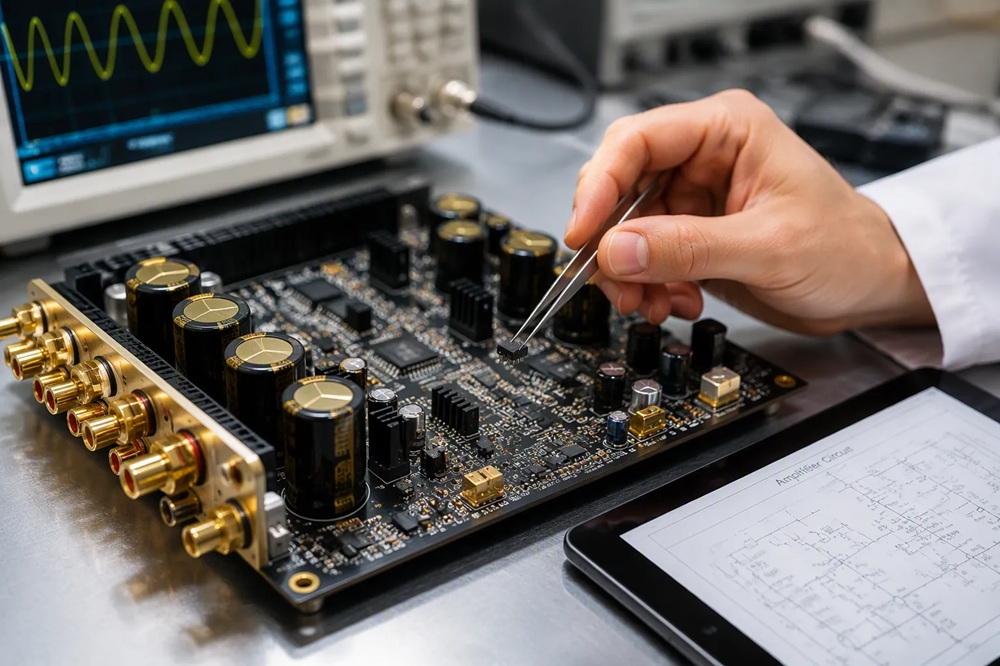
Great sound starts with great design. Premium OEM/ODM manufacturers invest heavily in acoustic engineering, transducer development, and materials science. You should look for partners who push the boundaries of what small form factors can achieve.
Modern driver design has advanced significantly in recent years. Leading manufacturers now implement several key innovations:
These advancements separate premium products from commodity ones. A partner with deep acoustic expertise can tune drivers to match your brand's target sound signature. They can also optimize mechanical designs for comfort during extended wear.
Tonewinner demonstrates this level of engineering depth. The company combines advanced driver technology with precision manufacturing to deliver audio products that meet demanding performance standards.
Design excellence means nothing without rigorous testing. You need a manufacturer who validates every unit against strict quality criteria. Premium OEM/ODM partners build quality into the process rather than inspecting it at the end.
Ask potential partners about their testing protocols. The following table outlines the performance metrics that distinguish premium manufacturers from standard ones:
|
Performance Metric / Quality Indicator |
Premium OEM/ODM Standard |
|
Conductor continuity testing |
100% of units tested |
|
Insulation resistance testing |
Batch sampling |
|
Hi-Pot (dielectric strength) testing |
Applied to all applicable units |
|
Pull-force testing at connector terminations |
Performed on finished cables |
|
Visual inspection for jacket defects |
Every unit inspected |
|
Defect rate target (finished goods) |
Below 0.5% |
|
Quality management certification |
ISO 9001 (baseline) |
|
Product-specific certifications |
CE marking, UL listing, and other market-specific marks |
|
Compliance documentation |
REACH and RoHS |
|
Transparency |
Willingness to share actual defect rates and references from private label programs |
A defect rate below 0.5% signals a mature quality system. You should also evaluate a partner's willingness to share real data. Manufacturers who hide their defect rates or refuse reference checks often have quality problems.
A premium manufacturer welcomes transparency because their quality systems can withstand scrutiny.
Tonewinner maintains strict quality control throughout production. The company tests every unit for continuity and inspects each product for defects before shipment.
Modern audio products are software platforms as much as hardware devices. You need a partner who can integrate firmware, manage connectivity protocols, and support third-party systems. This capability becomes critical for commercial audio installations and smart home products.
IP PA systems and networked audio devices must interoperate with multiple platforms. Premium manufacturers design for this complexity from the start. They typically support:
You should confirm genuine support for SIP, multicast, TCP/IP-based control, alarm input/output, and ONVIF for VMS integration. Do not stop at a specification sheet listing a protocol. Ask how the manufacturer has used that protocol in an actual project.
Request specific documentation and proof from potential partners:
These requests separate manufacturers with real software expertise from those who simply list features. A partner who provides API samples, technical documentation, and integration case studies demonstrates genuine capability.
Tonewinner supports comprehensive software integration for its OEM/ODM audio solutions. The company provides the documentation and technical support that brands need to deploy networked audio products successfully.
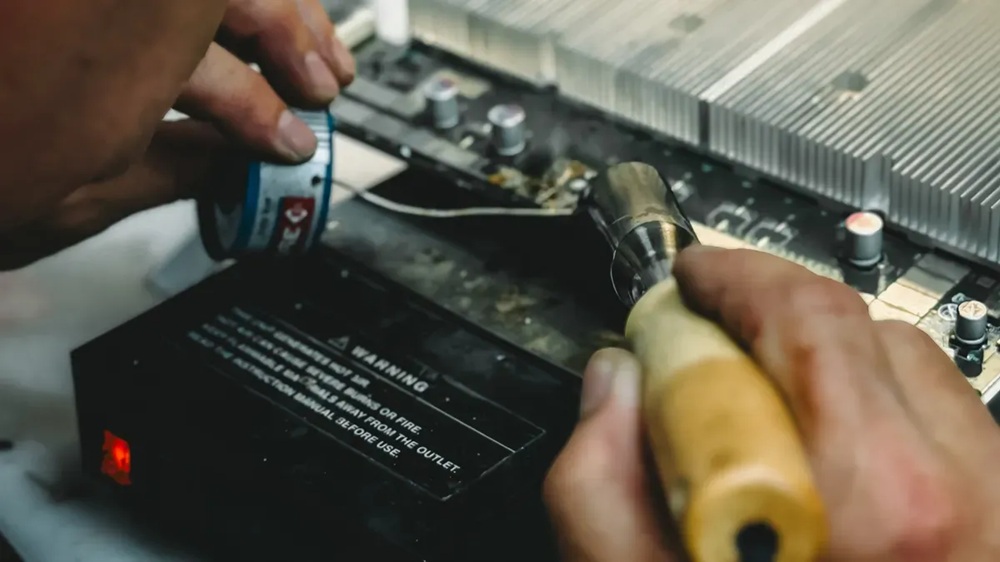
Strong engineering means little without the manufacturing muscle to produce at scale. You need a partner who can ramp production, source quality components, and adapt to your brand's specific requirements. These three capabilities determine whether your product reaches the market on time and at the quality level your customers expect.
You should evaluate a manufacturer's production capacity before you commit to a partnership. A partner with limited capacity will struggle to meet your growth targets. Ask about factory size, production lines, monthly output, and workforce size. These numbers tell you whether the manufacturer can handle your current volume and future expansion.
Scalability goes beyond raw capacity. A premium manufacturer builds systems that maintain quality as volume increases. They invest in automated testing equipment, standardized work instructions, and trained production teams. These investments prevent quality drift when production ramps up.
Supply chain resilience directly affects your lead times. Global disruptions can halt production and delay shipments. The following table shows common disruptions and how premium manufacturers mitigate them:
|
Supply Chain Disruption |
Impact on Lead Times |
Mitigation Strategy |
|
Supplier reliability issues (labor shortages, factory relocations, demand misjudgment) |
Production slowdowns and delays in speaker manufacturing |
Vet suppliers on price, accuracy, quality, and delivery speed; maintain frequent communication via video calls and factory visits; use real-time tracking |
|
Raw material price increases (5.4% in 2025, projected 4.4% in 2026) |
Higher component costs absorbed by companies, straining procurement timelines |
Continuous monitoring of raw material prices; strategic inventory planning |
|
U.S. import tariffs (rising from 2.2% to 10.9%) |
Increased cost and complexity of sourcing parts, extending procurement lead times |
Dual manufacturing; multiple suppliers; reshoring considerations |
|
COVID-19 pandemic |
Exposed failures of lean/just-in-time inventory models, causing major delays |
Stronger contingency plans; keeping extra parts; diversified supplier base |
|
Ever Given Suez Canal blockage |
Demonstrated how a single logistics event can halt global trade and delay shipments |
Backup plans; risk management programs; multi-supplier strategies |
|
Logistics and distribution challenges (fuel prices, last-mile delivery, paperwork errors) |
Slow shipments and delivery delays |
Good planning; regulatory compliance; real-time data sharing |
You should ask potential partners about their contingency plans. A manufacturer who relies on a single supplier or a single factory carries significant risk. One disruption can stop your production entirely.
As global uncertainty continues to impact manufacturing, OEMs realize that offshoring is a production decision of diminishing returns. Without a solid supply chain strategy behind overseas injection molding programs, the risks mount: long lead times, customs and compliance delays, inconsistent quality, and sometimes costly miscommunication. Many OEMs are being proactive in reshoring to avoid these pitfalls, take control of their supply chains, and gain the benefits outlined in the latest article.
Premium manufacturers build resilience into their operations. They typically implement several strategies to protect production:
Tonewinner operates multiple production facilities and maintains a diversified supplier network. This infrastructure allows the company to scale production for global audio brands while protecting against supply chain disruptions.
Component quality determines product reliability. You need a partner who sources premium materials and maintains strict incoming inspection standards. A manufacturer who cuts corners on components will deliver products that fail in the field.
Start by asking about the manufacturer's supplier qualification process. Premium partners evaluate suppliers on multiple criteria: price, accuracy, quality, and delivery speed. They conduct factory visits and maintain regular communication. They also track supplier performance over time.
Key components in audio products include drivers, diaphragms, voice coils, magnets, enclosures, connectors, and electronic components. Each component affects sound quality, durability, and user experience. You should understand where your partner sources these parts and how they verify quality.
Material selection also impacts product performance. For example, diaphragm material affects frequency response and distortion. Enclosure material affects resonance and acoustic properties. A premium manufacturer understands these relationships and selects materials that support your target sound signature.
Incoming inspection protects against defective components. Ask about the manufacturer's inspection protocols. Do they test every batch? Do they maintain traceability records? Can they identify which supplier provided a specific component if a problem arises?
Tonewinner maintains rigorous supplier qualification and incoming inspection programs. The company sources premium components and verifies quality at every stage of production.
Every audio brand has unique requirements. You need a partner who can adapt to your specifications rather than forcing you into a fixed product catalog. Customization capability separates true OEM/ODM partners from contract manufacturers who only assemble standard designs.
Customization spans multiple areas of product development. The following table outlines what premium manufacturers offer:
|
Customization Category |
Specific Offerings |
|
Acoustic Design & Engineering |
Driver selection, cabinet acoustic modeling, crossover design, DSP tuning for optimal sound performance |
|
Cabinet Manufacturing |
CNC precision cutting, reinforced cabinet structures, durable coatings, strict production standards |
|
Branding & Customization |
Logo customization, model naming, color options, grill design, packaging support |
|
System Development |
Complete solutions: line arrays, PA speakers, subwoofers, column speakers, active systems |
|
Design & Engineering Process |
Acoustic design, cabinet drawings, component selection, system development |
|
Sample Development |
Prototype production, testing, fine-tuning based on feedback |
You should evaluate a partner's willingness to customize at every level. Some manufacturers offer only cosmetic changes like logo printing. Premium partners provide full acoustic tuning, cabinet redesign, and system development.
With ODM, we deliver complete product development — acoustic engineering, enclosure design, crossover development, amplifier integration, and industrial design — turning concepts into finished products ready for market.
The customization process typically follows a structured path. You share your product concept and target specifications. The manufacturer develops acoustic designs and cabinet drawings. They select components and build prototypes. You test the prototypes and provide feedback. The manufacturer fine-tunes the design until it meets your requirements.
This iterative process requires strong communication and technical expertise. A partner who rushes through prototyping or skips testing phases will deliver products that miss your expectations. You should confirm that the manufacturer allocates sufficient time and resources to sample development.
Tonewinner offers comprehensive customization services for audio brands. The company supports acoustic tuning, cabinet design, branding, and full system development. This flexibility allows brands to create differentiated products that stand out in competitive markets.
Innovation drives product differentiation, while compliance opens global market doors. You need a partner who invests in future technologies and navigates complex regulatory landscapes. Both capabilities directly determine international success.
Regulatory compliance controls your ability to sell audio products across borders. Each market enforces specific certification requirements you must meet before launch. The table below summarizes essential certifications for major markets:
|
Certification |
Applies To |
Main Purpose |
Target Market |
|
FCC |
Electronic and wireless audio products |
Electromagnetic compatibility and radio compliance |
United States |
|
CE |
Consumer electronics, wireless products, powered speakers |
EU safety, EMC, and radio equipment compliance |
European Union |
|
RoHS |
Electronic components and finished products |
Restriction of hazardous substances |
EU and global retail channels |
|
CCC |
Powered audio equipment |
Product safety and quality |
China |
|
KC |
Audio electronics |
Electromagnetic compatibility and safety |
South Korea |
ISO 9001 certification signals documented quality processes, but it does not guarantee product-level repeatability on its own. As industry experts note:
ISO 9001 is widely used as a quality management system standard, but certification alone does not prove product-level repeatability. Evidence of controlled change, defined responsibilities, and measurable acceptance criteria still matters.
You should verify active certifications and request compliance documentation for each target market. Tonewinner holds these credentials, enabling global distribution of Custom OEM/ODM Audio Solutions.
Audio technology evolves rapidly, and your manufacturer must lead the change. Premium OEM/ODM partners invest in these key research areas:
Spatial audio is now a baseline consumer expectation across gaming, streaming, and home theater. You need a partner who invests in these technologies today.
Delivering custom solutions requires a structured, end-to-end development process. Premium manufacturers manage six distinct stages:
An integrated approach reduces friction. Fragmented interventions create inefficiencies that delay time to market. Tonewinner provides end-to-end project management for Custom OEM/ODM Audio Solutions, ensuring smooth transitions from concept to final delivery.
The eight capabilities form a complete evaluation framework: engineering and quality, manufacturing and supply chain, and innovation and compliance. Score every candidate against each capability. Do not rely on price or sample quality alone. Build a scorecard that weighs quality systems, on-time delivery, cost competitiveness, technical support, compliance, communication, batch consistency, and scalability. A premium OEM/ODM partner with strength across all eight areas becomes a long-term competitive asset, not just a supplier. Tonewinner demonstrates how strength across engineering, manufacturing, and innovation translates into reliable Custom OEM/ODM Audio Solutions for global audio brands.
You score candidates against all eight capabilities. Request documentation, defect rates, and integration case studies. Tonewinner provides transparent quality data and proven technical support.
You need FCC and CE for major markets. RoHS ensures material safety. ISO 9001 confirms quality systems. Tonewinner holds these credentials for global distribution.
You ask about factory size, production lines, and monthly output. Check for dual manufacturing and diversified suppliers. Tonewinner operates multiple facilities to support growing brands.
Tel : +86 020 3479 6146
Tel : +86 020 3479 7660
WhatsApp : +86 15812388120
Email : simi@tonewinner.com
Address : Building 2, No.1, Hongsheng 3 Road Dashi Street, Panyu District Guangzhou, 511430 China
© 2026 Guangzhou Tonewinner Electronics Co., Ltd
Sitemap | XML | Privacy Policy |