When building a Hi-Fi system, one of the first questions is surprisingly simple: what should you use as your music source? A network streamer, a dedicated CD player, or a smartphone connected to an external DAC?
All three options can deliver enjoyable music, but they work in different ways. A streamer is designed for network music and digital libraries. A CD player focuses on physical discs and stable playback. A phone with a DAC offers a compact and flexible way to enjoy digital music without adding a full-size source component.
So, which source is best for a Hi-Fi system? If you mainly listen to online music and high-resolution digital files, a dedicated network streamer is usually the most versatile choice. If you own a CD collection and prefer physical media, a dedicated CD player makes more sense. If you want a simple, affordable setup, a smartphone paired with a suitable DAC can be a practical starting point.
For listeners looking at a complete Hi-Fi source solution, Tonewinner offers several relevant options, including the TY-i2PRO network streaming player, the TY-1CDPRO Hi-End CD player, and the multifunctional AD-89D integrated amplifier.
Quick answer: Choose a streamer for online music, NAS libraries, and everyday digital listening. Choose a CD player for physical-disc playback and a dedicated source component. Choose a phone with a DAC for convenience and a compact system. If you want several source functions in one component, consider an integrated solution such as the Tonewinner AD-89D.
A Hi-Fi system needs more than speakers and an amplifier. It also needs a source that provides the music signal. The source may be a network streamer, CD player, smartphone, computer, television, or another digital device.
In a typical digital Hi-Fi setup, the music signal follows a simple path:
Music source → Digital-to-analog conversion (DAC) → Preamplifier / Amplifier → Speakers
The DAC converts a digital audio signal into an analog signal that an amplifier can use. Some source components have a built-in DAC and provide analog outputs. Others provide digital outputs so that an external DAC or amplifier can handle the conversion.
This distinction matters when comparing a streamer, CD player, and phone. They are not simply three devices that play the same files. They offer different playback methods, connection options, user experiences, and levels of system integration.
A network streamer is designed to access music through a network connection. Depending on the model, it may support online music services, NAS storage, shared folders, USB drives, internal storage, and local digital music libraries.
For listeners who mainly use streaming platforms or maintain a large collection of digital music files, a dedicated streamer can make the system easier to manage. Instead of relying on a phone or computer for every playback session, the streamer becomes a dedicated source component in the Hi-Fi system.
A good network player can also offer more connection choices than a typical smartphone. Depending on its design, it may provide RCA or balanced XLR analog outputs, as well as optical and coaxial digital outputs. This makes it easier to connect the player to an integrated amplifier, preamplifier, external DAC, or other compatible equipment.
Why consider a dedicated streamer?
For this type of system, the Tonewinner TY-i2PRO is a relevant option. It is a network streaming and digital music player designed for local playback and network music management. Its listed features include Wi-Fi 6, Ethernet, NAS access, local storage playback, app control, and support for multiple audio formats.
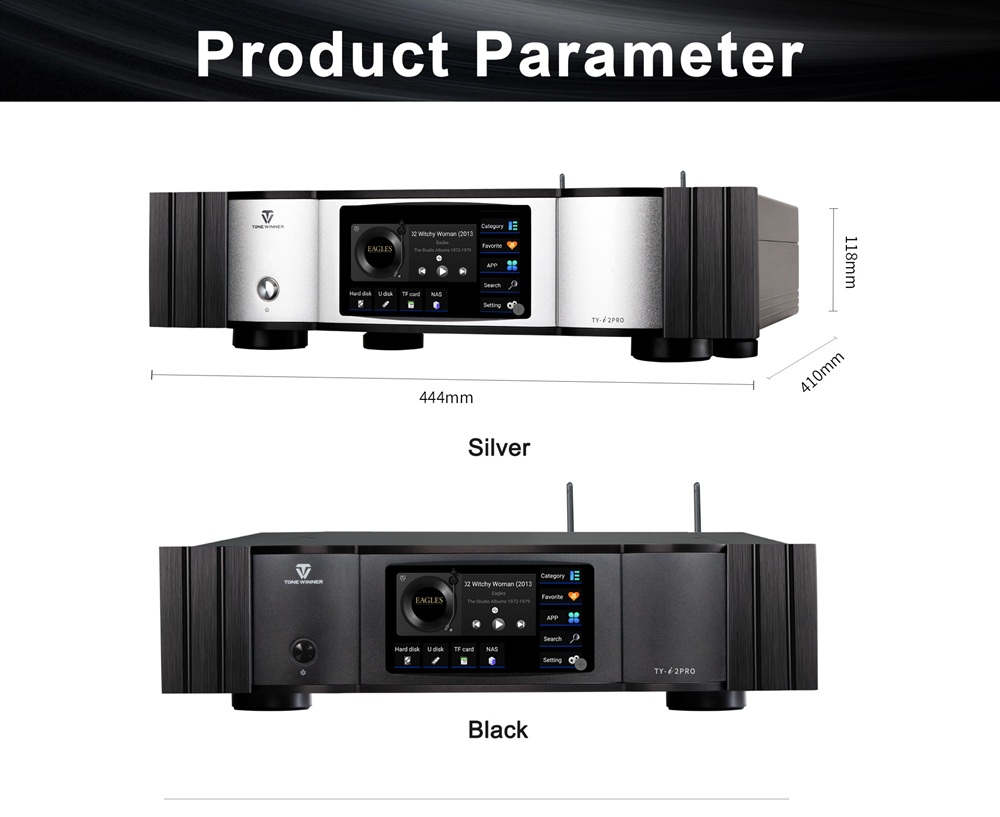
Tonewinner TY-i2PRO network streaming music player
The TY-i2PRO provides RCA and XLR analog outputs, along with optical and coaxial digital outputs. This gives users flexibility when connecting it to different Hi-Fi systems. You can use its analog output with a compatible amplifier or send a digital signal to another DAC-equipped component.
Another useful feature is its support for CD playback and lossless CD ripping through an external USB optical drive. The optical drive needs to be supplied separately. This means users can add CD playback and transfer disc collections into a digital library without treating the streamer as a conventional built-in CD transport.
For listeners who want a dedicated digital source with network and local playback options, explore the Tonewinner wireless digital player range.
Who should choose a network streamer? It is a strong choice for listeners who use online music services, own large digital music libraries, store music on NAS devices, or want one central source for everyday Hi-Fi listening.
A dedicated CD player is still a sensible choice if you own a collection of CDs and enjoy playing albums from physical discs. Unlike a network streamer, which retrieves music from online services or digital storage, a CD player reads the audio data directly from a disc.
There are practical reasons to keep a CD player in a modern Hi-Fi system. You do not need a network connection to play a disc, you are not dependent on a streaming subscription for the music you own, and you can enjoy a consistent physical-media listening experience.
A dedicated CD player may also provide both analog and digital outputs. With analog output, the player's internal DAC converts the digital audio signal before sending it to an amplifier. With digital output, a compatible external DAC or amplifier can perform the conversion instead.
For example, the Tonewinner TY-1CDPRO is a dedicated Hi-End CD player with both analog and digital outputs. The official product information lists support for CD, HDCD, MP3, and WMA formats. Its design includes an ES9038 DAC, OPA1656 op-amp array, a magnetic levitation disc mechanism, and separated internal chambers for key circuit sections.
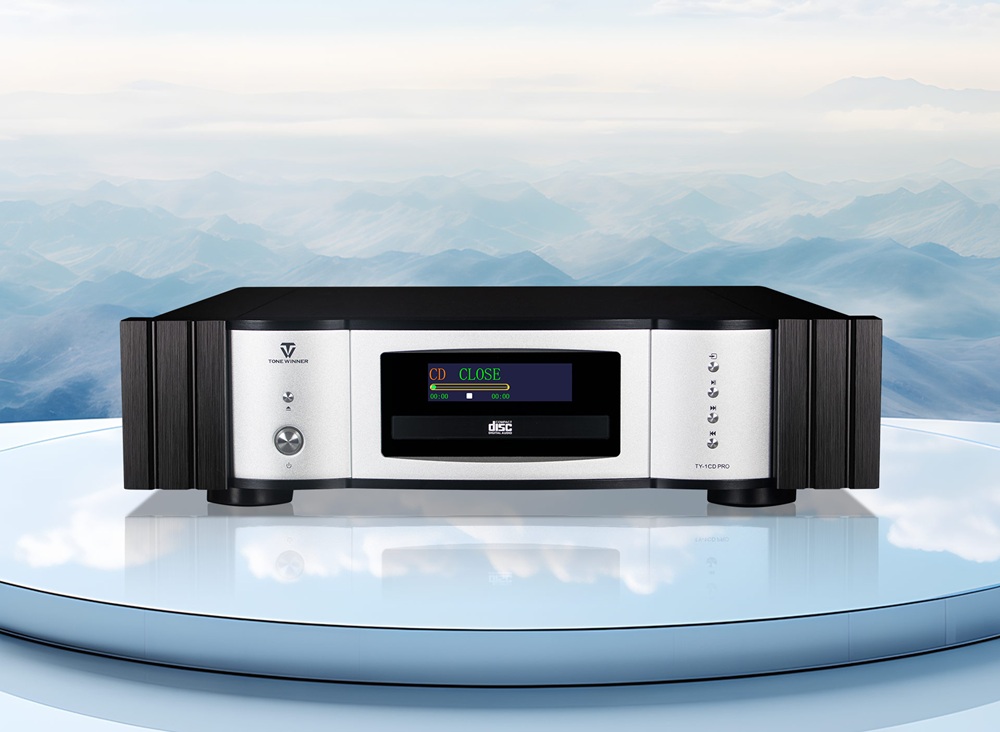
Tonewinner TY-1CDPRO Hi-End CD player
The TY-1CDPRO is designed for users who want a dedicated disc player with flexible system connections. Its balanced XLR and unbalanced analog outputs allow it to connect directly to compatible amplification equipment. Its digital outputs also make it possible to use an external DAC when the rest of the system is configured for that arrangement.
One detail is worth understanding: a standard audio CD uses 16-bit / 44.1kHz PCM audio. The TY-1CDPRO's high-rate digital processing capability does not change the original resolution of the CD itself. It is important to distinguish the source format from the player's internal processing and output capabilities.
If physical discs remain an important part of your listening habits, you can explore the Tonewinner CD player collection to compare available models and connection options.
Who should choose a CD player? A dedicated CD player is ideal for music lovers with an established CD collection, listeners who prefer physical albums, and users who want a separate source component in a traditional Hi-Fi setup.
A smartphone is probably the most convenient music source for many people. It can access streaming apps, downloaded albums, podcasts, and personal music libraries. Add an external DAC, and the phone can become the digital source for a more capable audio system.
However, the phrase "phone + DAC" can describe several different setups. A phone may connect to a USB DAC through a compatible digital connection, or it may send audio wirelessly to a Bluetooth-enabled device. These connection methods are not identical.
With a wired USB connection, a compatible phone sends digital audio to an external DAC. The DAC then converts the signal into analog audio. This allows the external DAC, rather than the phone's internal audio circuitry, to handle digital-to-analog conversion.
With Bluetooth, the phone sends audio wirelessly to a compatible receiver or amplifier. The actual audio quality depends on the Bluetooth codec, source material, and receiving device. Bluetooth is convenient, but it should not automatically be treated as equivalent to a wired lossless connection.
Advantages of a phone-based source:
There are also limitations. A phone may receive notifications, run background applications, or interrupt playback. Battery life and connection compatibility can become practical concerns. A separate DAC may also require additional cables, adapters, or power.
For users who want smartphone convenience without making the phone the only source component, an integrated amplifier can be a useful alternative. The Tonewinner AD-89D supports Bluetooth input, allowing compatible phones and other Bluetooth devices to send audio wirelessly to the system. It also combines CD playback, digital playback, decoding, and amplification in one unit.
In other words, the AD-89D is not a small USB DAC for a phone. It is a full-size integrated Hi-Fi component that offers a convenient Bluetooth input alongside several other source and amplification functions.
The best source depends on how you listen to music, not simply on which device has the highest specification. The following comparison summarizes the practical differences.
| Comparison | Network Streamer | CD Player | Phone + DAC |
|---|---|---|---|
| Main music source | Online services, NAS, local files | Physical CDs | Music apps and phone storage |
| Internet required | For online streaming; not always for local playback | No | Usually for online services; not for downloaded files |
| Physical media | Not usually; some models support external optical drives | Yes | No built-in disc playback |
| System flexibility | High, depending on network and output options | Good, depending on analog and digital outputs | Depends on phone, DAC, and connection |
| Convenience | Excellent for digital libraries | Simple disc-based operation | Excellent for everyday mobile use |
| Best for | Digital music enthusiasts | CD collectors | Compact and budget-conscious setups |
There is no universal winner. A well-designed CD player can provide excellent playback from a CD, while a capable streamer can offer a wider range of digital sources. A phone with a suitable DAC can also sound very good. The quality of the recording, DAC implementation, output stage, amplifier, speakers, and system matching all influence the final result.
Rather than choosing by product category alone, start with the way you actually listen to music.
Choose a network streamer if you:
Choose a CD player if you:
Choose a phone with a DAC if you:
There is also a fourth option: combine source functions in one integrated component. This can be useful if you want CD playback, Bluetooth, digital inputs, and speaker amplification without purchasing several separate devices.
Not every listener wants a separate streamer, CD player, DAC, preamplifier, and power amplifier. A multifunctional integrated amplifier can reduce equipment count and simplify system connections.
The Tonewinner AD-89D combines several functions: CD playback, streaming media playback, preamplifier decoding, and power amplification. It also supports Bluetooth, USB and TF card local playback, USB-Audio input for a computer, optical and coaxial digital inputs, HDMI ARC, and a subwoofer output.

Tonewinner AD-89D multifunctional integrated Hi-Fi amplifier
According to the product specifications, the AD-89D is a two-channel integrated amplifier rated at 2 × 130W under the stated 8-ohm, 1kHz, THD=1% test condition. Its built-in CD mechanism and multiple digital inputs make it suitable for listeners who want several playback options in one chassis.
For a smartphone user, Bluetooth provides a straightforward wireless connection. For a computer-based setup, the USB-Audio input supports PCM up to 48kHz/24-bit according to the product page. For TV audio, HDMI ARC offers another connection route. The subwoofer output also allows a compatible powered subwoofer to be added to a 2.1-channel system.
The AD-89D is therefore worth considering if you want to simplify your equipment rack while retaining several ways to play music. You can also compare it with other options in the Tonewinner Hi-Fi amplifier range.
Yes. In fact, many Hi-Fi systems use more than one source. A streamer and CD player can coexist in the same setup, with each connected to a compatible amplifier or preamplifier input.
For example, a system built around the TY-i2PRO and TY-1CDPRO can provide access to network music and physical CDs. The streamer can handle online services, NAS libraries, and local files, while the CD player handles disc playback. Both can connect to an amplifier through their supported outputs.
If you use an external DAC, check the digital output and input formats supported by both devices. If you connect through analog outputs, check that the amplifier has suitable line-level inputs. Balanced XLR connections should only be used when both connected components support compatible balanced connections.
The important point is that a source component does not need to replace every other source. A system can be built around different listening habits, and you can add another source later if your music collection or usage changes.
Not necessarily. The source is important, but it is only one part of the playback chain. The quality of the recording and mastering, the digital signal path, DAC design, analog output stage, amplifier performance, speaker characteristics, and room acoustics all contribute to what you hear.
For example, changing from Bluetooth to a wired digital connection may be useful if your current Bluetooth setup limits the audio format or introduces unwanted conversion. However, it does not guarantee a dramatic improvement in every system. The difference depends on the devices, connection, source material, and listening environment.
Likewise, buying a high-end streamer will not automatically solve speaker-placement problems or room-acoustic issues. It is usually better to build a balanced system than to spend the entire budget on one component.
A practical approach is to choose the source that matches your music habits first, then make sure its outputs are compatible with your amplifier and speakers. If you are planning a complete system, consider the source and amplification together rather than treating them as unrelated purchases.
For most modern digital music listeners, a dedicated network streamer is the most flexible long-term source. It can bring online music, NAS libraries, and local digital files into one Hi-Fi system. The Tonewinner TY-i2PRO is designed around this type of listening, with network connectivity, local playback, and multiple analog and digital outputs.
If your music collection is built around physical albums, a dedicated CD player remains a strong choice. The Tonewinner TY-1CDPRO offers dedicated disc playback, an ES9038 DAC, and a range of analog and digital connections for a more traditional Hi-Fi setup.
If convenience and a compact equipment setup matter most, a smartphone with a suitable DAC is a sensible starting point. And if you want several source functions combined with speaker amplification, the Tonewinner AD-89D offers CD playback, Bluetooth, digital inputs, and integrated amplification in one component.
The best music source is the one that fits your listening habits and connects properly to the rest of your system. Start with the music you listen to most, consider the connections you need, and choose equipment that leaves room for your system to grow.
Is a network streamer better than a CD player?
Neither is universally better. A network streamer is more suitable for online music, NAS libraries, and digital files. A CD player is better suited to physical-disc collections and listeners who prefer playing albums from CDs. The right choice depends on your music sources and listening habits.
Does a network streamer need an external DAC?
No. Many network streamers include a built-in DAC and provide analog outputs for direct connection to an amplifier. A streamer with digital outputs can also connect to a compatible external DAC if you prefer to use another component for digital-to-analog conversion.
Can I connect a smartphone directly to a Hi-Fi amplifier?
Yes, if the amplifier supports a compatible input method. Depending on the equipment, you may use Bluetooth, an analog audio output, or a compatible external USB DAC connected to a suitable amplifier input. Always check the phone's output capability and the amplifier's input connections.
Is Bluetooth good enough for Hi-Fi music?
Bluetooth is convenient and can provide enjoyable sound quality. However, the actual result depends on the Bluetooth codec, source quality, and receiving device. For listeners who prioritize a wired digital signal path or specific high-resolution formats, a compatible wired connection may be more appropriate.
Can the Tonewinner TY-i2PRO play CDs?
Yes. The TY-i2PRO supports CD playback and lossless CD ripping when connected to an external USB optical drive. The optical drive is not included and needs to be supplied separately.
Can the Tonewinner TY-i2PRO connect to an external DAC?
Yes. The TY-i2PRO provides optical and coaxial digital audio outputs, which can connect to a compatible external DAC. It also has RCA and XLR analog outputs for direct connection to suitable amplification equipment.
Does the Tonewinner TY-1CDPRO have a built-in DAC?
Yes. The TY-1CDPRO uses an ES9038 DAC and provides analog outputs. It also offers digital outputs, allowing users to connect a compatible external DAC or digital-input amplifier if preferred.
What is the difference between the TY-i2PRO and TY-1CDPRO?
The TY-i2PRO is a network streaming and digital music player designed for online music, NAS access, and local file playback. The TY-1CDPRO is a dedicated CD player designed primarily for physical-disc playback. The TY-i2PRO can also play and rip CDs through a separately supplied external USB optical drive.
Is the Tonewinner AD-89D a CD player or an amplifier?
It is both. The AD-89D is a two-channel integrated amplifier that combines CD playback, streaming media playback, preamplifier decoding, and power amplification. It also supports Bluetooth, USB and TF card playback, digital inputs, HDMI ARC, and subwoofer output.
Which source should I buy first for a new Hi-Fi system?
Choose according to your main music source. Start with a network streamer if you mostly use online services or digital files, a CD player if you own and regularly play CDs, or a phone and DAC if you want a compact and affordable setup. Make sure the source has compatible outputs for your amplifier.
Tel : +86 020 3479 6146
Tel : +86 020 3479 7660
WhatsApp : +86 15812388120
Email : simi@tonewinner.com
Address : Building 2, No.1, Hongsheng 3 Road Dashi Street, Panyu District Guangzhou, 511430 China
© 2026 Guangzhou Tonewinner Electronics Co., Ltd
Sitemap | XML | Privacy Policy |